
01
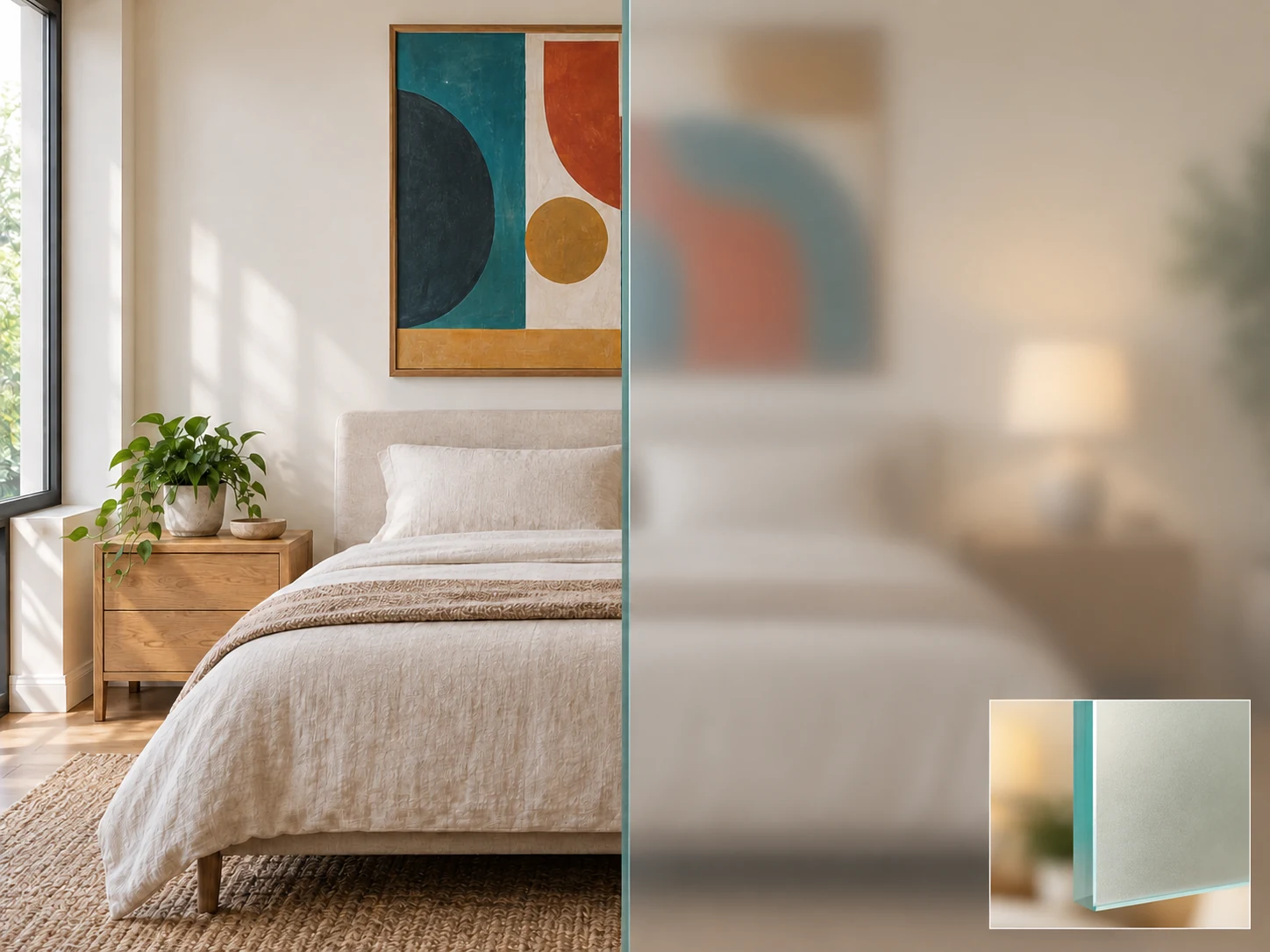
Satin clear float
A one-sided satin finish on standard clear glass.
Thickness / build-up: 3, 4, 5, 6, 8, 10 and 12 mm

ZWAKA · Quick contact
Send us a project description and drawings, or call ZWAKA Glass directly.
B2B material catalogue · Glass to drawing
Diffuse light, soften the view and control the surface finish. Satin glass on clear, low-iron, grey or bronze substrates for furniture and interior components.
Explore materials and specifications ↓Material and function
A matt surface scatters light and softens the image seen through the pane. Acid-etched satin glass and sandblasted glass use different surface treatments; they should not be assumed to have identical texture, cleaning requirements or appearance.
The substrate still contributes its own colour. Satin low-iron glass gives a more neutral base, while grey or bronze glass adds a tint. The degree of privacy depends on the product, illumination and the distance of objects behind the glass.
ZWAKA material schedule
The following variants and thicknesses come from the existing ZWAKA material schedule. Current supply, manufacturer, sheet size and processing are confirmed for the order. Build-up codes are retained for laminated products.
A one-sided satin finish on standard clear glass.
Thickness / build-up: 3, 4, 5, 6, 8, 10 and 12 mm
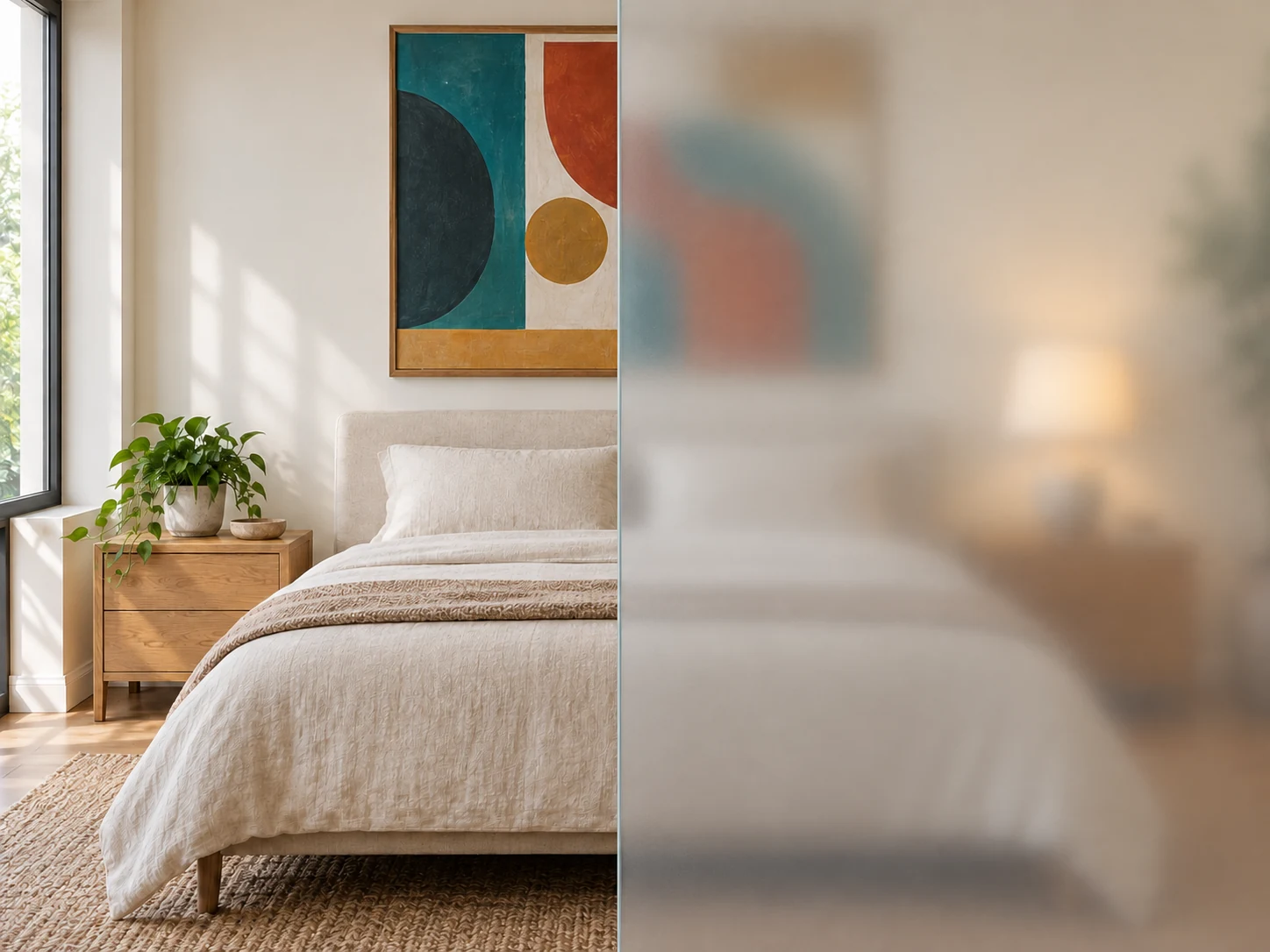
A lighter, more neutral base for a satin effect.
Thickness / build-up: 4, 6, 8 and 10 mm
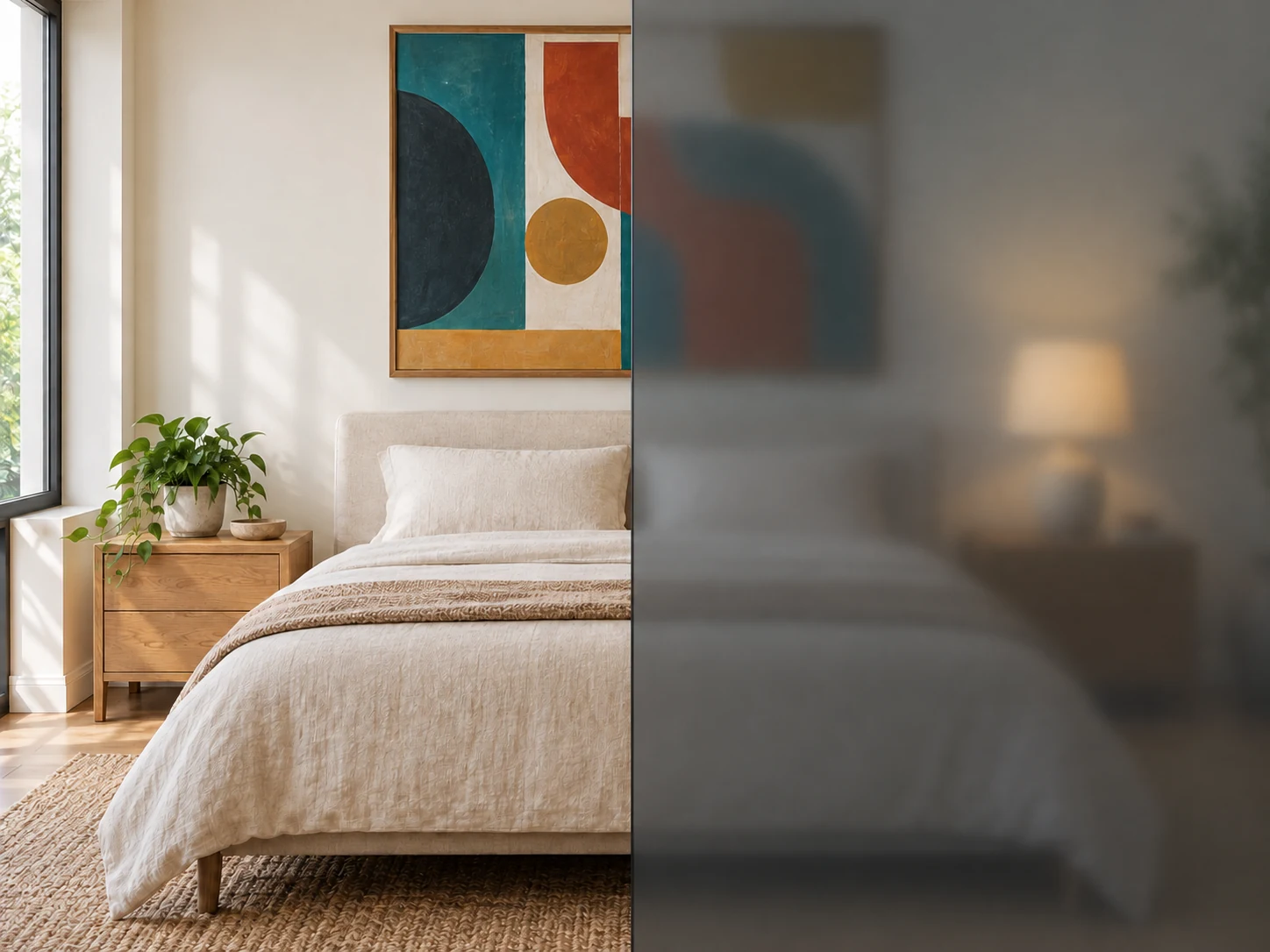
A grey tint combined with a softened view.
Thickness / build-up: 4, 6 and 8 mm
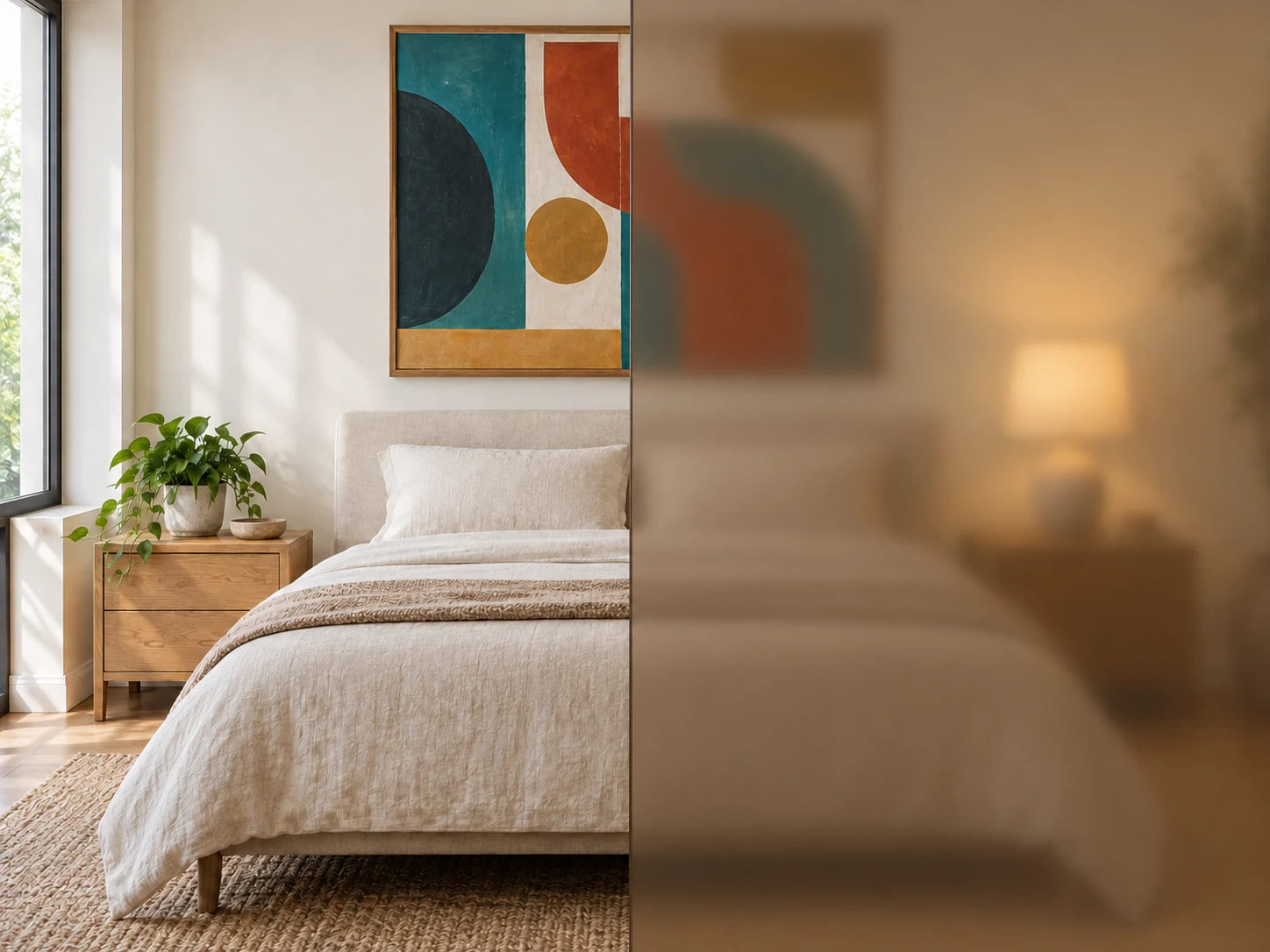
Warm bronze colour with a matt surface.
Thickness / build-up: 6 and 8 mm
B2B applications
Furniture fronts: reduce the visibility of stored objects without using an opaque panel.
Partitions and interior panels: balance light transmission, privacy and cleaning access.
Illuminated elements: approve the surface together with the light source and its spacing.
Before production
FAQ
It usually softens the view while transmitting light. Objects close to the glass may remain visible; test the exact glass in the intended setting.
No. They are different surface treatments. Texture, optical effect and care requirements should be compared using the actual product.
The material schedule includes satin grey and bronze variants as well as clear and low-iron substrates. Thickness, supply and further processing are confirmed for each order.
Yes. Send the first quantity, expected repeat demand and component drawings. We review the material, processing and conditions for a prototype, trial batch or repeat production. There is no single minimum quantity promised for every material.
Send drawings with dimensions and thickness, material or sample reference, quantity, edge finish, holes and cut-outs, assembly details and intended use. Include requirements for safety, appearance, packaging and repeat batches where relevant.
Prototype · Short batch · Repeat production
Send drawings with dimensions and thickness, material or sample reference, quantity, edge finish, holes and cut-outs, assembly details and intended use. Include requirements for safety, appearance, packaging and repeat batches where relevant.
A joiner, metalworker or assembly partner can provide the supporting structure. ZWAKA supplies the glass or mirror component to the agreed specification; coordinate interfaces and responsibilities before manufacture.