
01
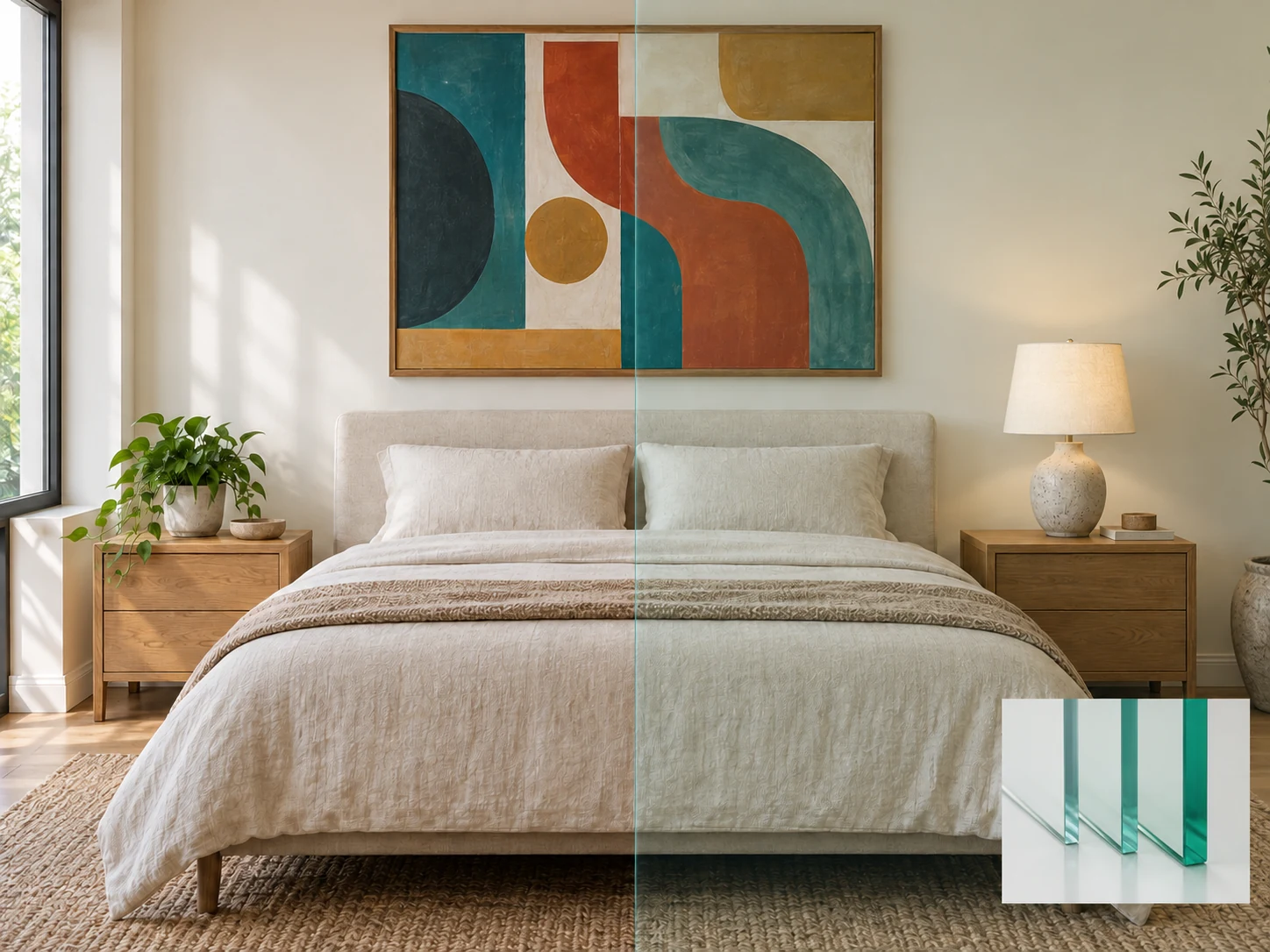
Clear float glass
Transparent base with a naturally greenish edge.
Thickness / build-up: 2, 3, 4, 5, 6, 8, 10, 12, 15 and 19 mm
Material card and sheet sizes ↗
ZWAKA · Quick contact
Send us a project description and drawings, or call ZWAKA Glass directly.
B2B material catalogue · Glass to drawing
Clear float and low-iron glass for furniture, display cases and technical components. Choose the appearance, thickness and processing around the finished part, from a first sample to repeat batches.
Explore materials and specifications ↓Material and function
Float glass is a flat, transparent base material for cut-to-size components. Standard clear glass has a slight green tint, particularly visible at exposed edges and in thicker panes. This is a material characteristic, not a surface coating.
Low-iron glass reduces this tint. It is useful when the displayed product, a light background or an exposed polished edge needs a more neutral appearance. The choice of substrate does not by itself establish safety, strength or suitability for a particular mounting system.
ZWAKA material schedule
The following variants and thicknesses come from the existing ZWAKA material schedule. Current supply, manufacturer, sheet size and processing are confirmed for the order. Build-up codes are retained for laminated products.
Transparent base with a naturally greenish edge.
Thickness / build-up: 2, 3, 4, 5, 6, 8, 10, 12, 15 and 19 mm
Material card and sheet sizes ↗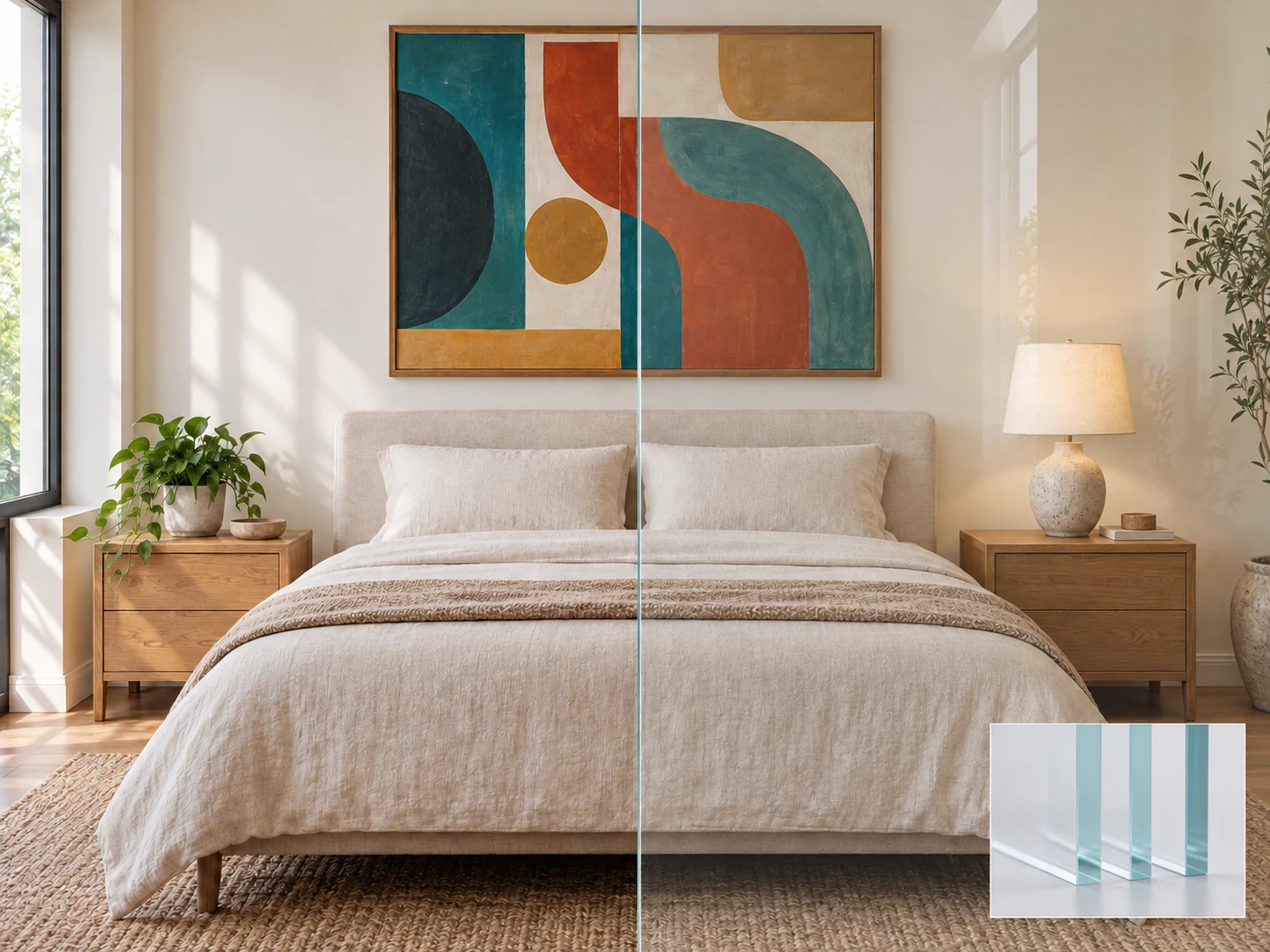
A more neutral substrate for exposed edges and colour-sensitive displays.
Thickness / build-up: 4, 5, 6, 8, 10, 12, 15 and 19 mm
Material card and sheet sizes ↗B2B applications
Furniture shelves and table tops: specify supports, exposed edges and the intended load together.
Display cabinets and shopfitting: assess product colours, lighting, reflections and hardware.
Technical components: define dimensions, holes, cut-outs and assembly interfaces on a drawing.
Before production
FAQ
Both can be clear float glass. A low-iron composition reduces the green tint of standard clear glass, especially noticeable at the edge or through a thicker build-up.
No. Low-iron describes the substrate. Toughening or laminating is a separate processing decision, checked for the component and its use.
The separate float and low-iron material cards list the published sheet formats by thickness. Sheet sizes are not guaranteed maximum finished-part dimensions; availability and processing are confirmed for the drawing.
Yes. Send the first quantity, expected repeat demand and component drawings. We review the material, processing and conditions for a prototype, trial batch or repeat production. There is no single minimum quantity promised for every material.
Send drawings with dimensions and thickness, material or sample reference, quantity, edge finish, holes and cut-outs, assembly details and intended use. Include requirements for safety, appearance, packaging and repeat batches where relevant.
Prototype · Short batch · Repeat production
Send drawings with dimensions and thickness, material or sample reference, quantity, edge finish, holes and cut-outs, assembly details and intended use. Include requirements for safety, appearance, packaging and repeat batches where relevant.
A joiner, metalworker or assembly partner can provide the supporting structure. ZWAKA supplies the glass or mirror component to the agreed specification; coordinate interfaces and responsibilities before manufacture.