
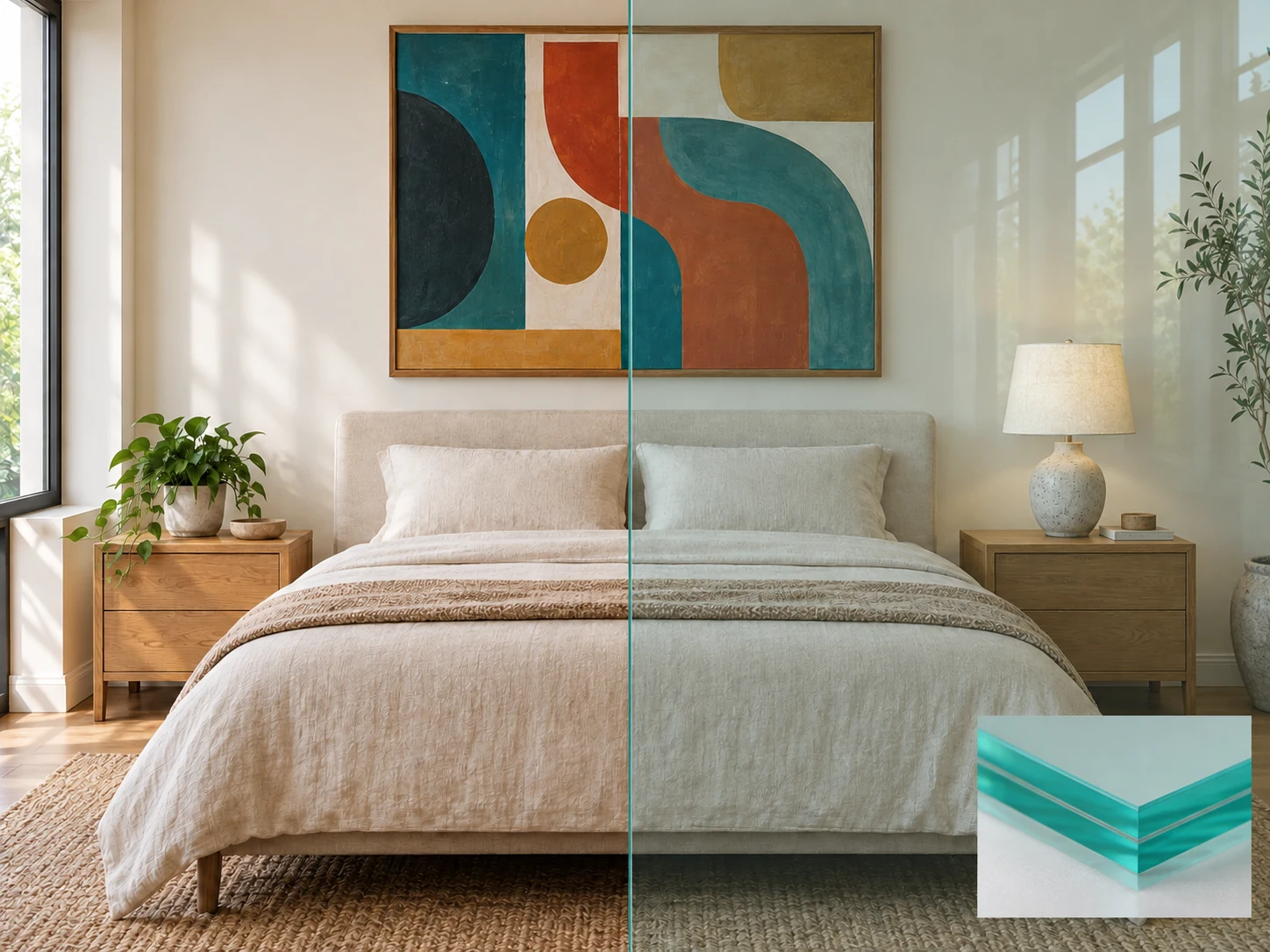
01
Clear float laminate
A transparent laminated construction on standard float.
Thickness / build-up: 22.1, 33.1, 33.2, 44.1, 44.2, 44.4, 55.1, 55.2, 66.1 and 66.2

ZWAKA · Quick contact
Send us a project description and drawings, or call ZWAKA Glass directly.
B2B material catalogue · Glass to drawing
Layered glass components with clear, low-iron, grey, bronze or opaque builds. Define the complete pane and interlayer construction for the application, not just a nominal thickness.
Explore materials and specifications ↓Material and function
Laminated glass combines panes with an interlayer. The resulting component can combine optical and functional properties. VSG is the German abbreviation for laminated safety glass; the required safety performance must be established for the complete product and its application.
The base glass, number of layers, interlayer type, thickness and any heat treatment all affect the specification. A laminate is not automatically acoustic glass, structural glass or a product with a particular resistance class. Request the relevant product documentation for the selected build-up.
ZWAKA material schedule
The following variants and thicknesses come from the existing ZWAKA material schedule. Current supply, manufacturer, sheet size and processing are confirmed for the order. Build-up codes are retained for laminated products.
A transparent laminated construction on standard float.
Thickness / build-up: 22.1, 33.1, 33.2, 44.1, 44.2, 44.4, 55.1, 55.2, 66.1 and 66.2
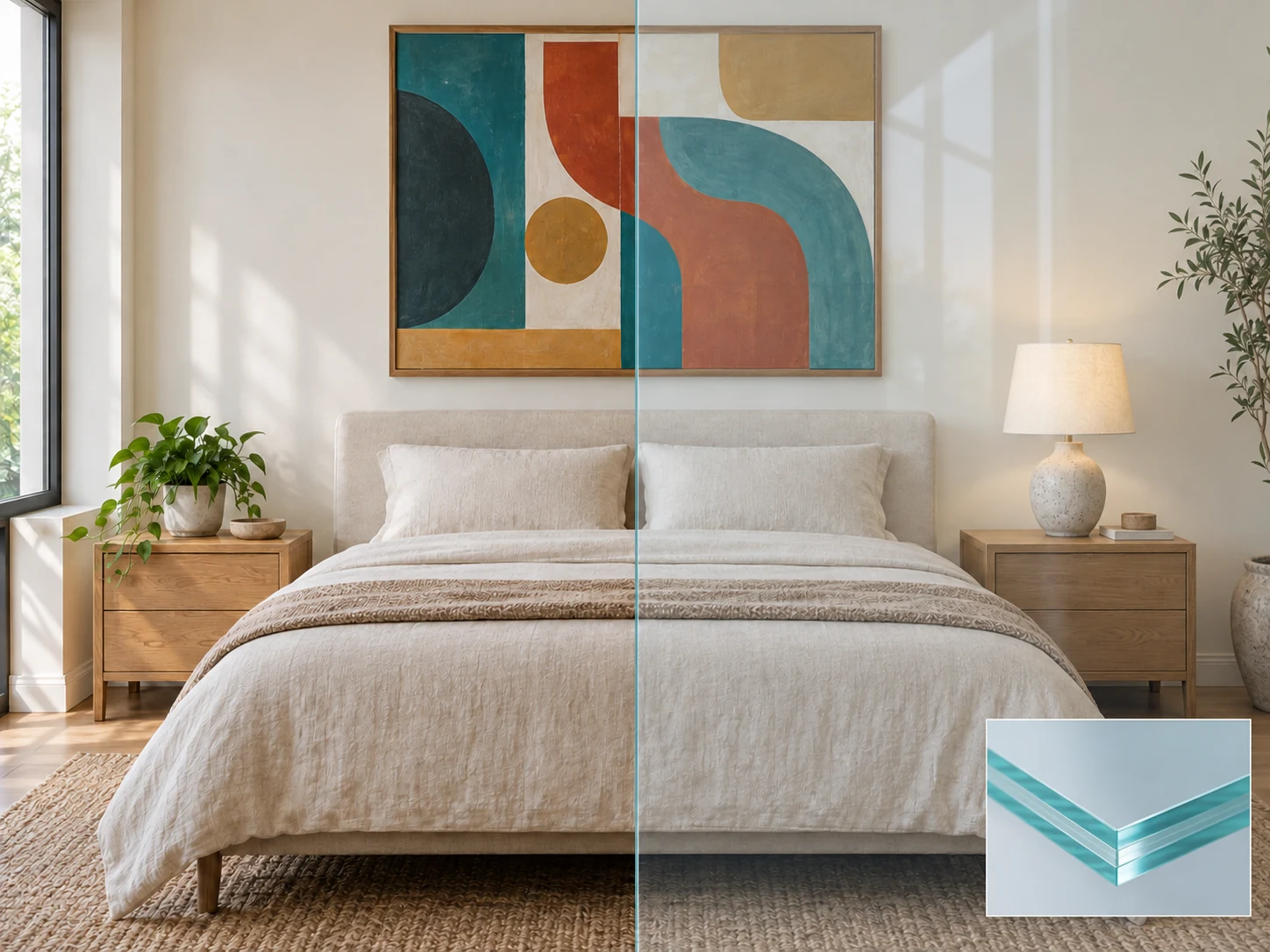
A laminate with a more neutral colour.
Thickness / build-up: 33.1 and 44.1
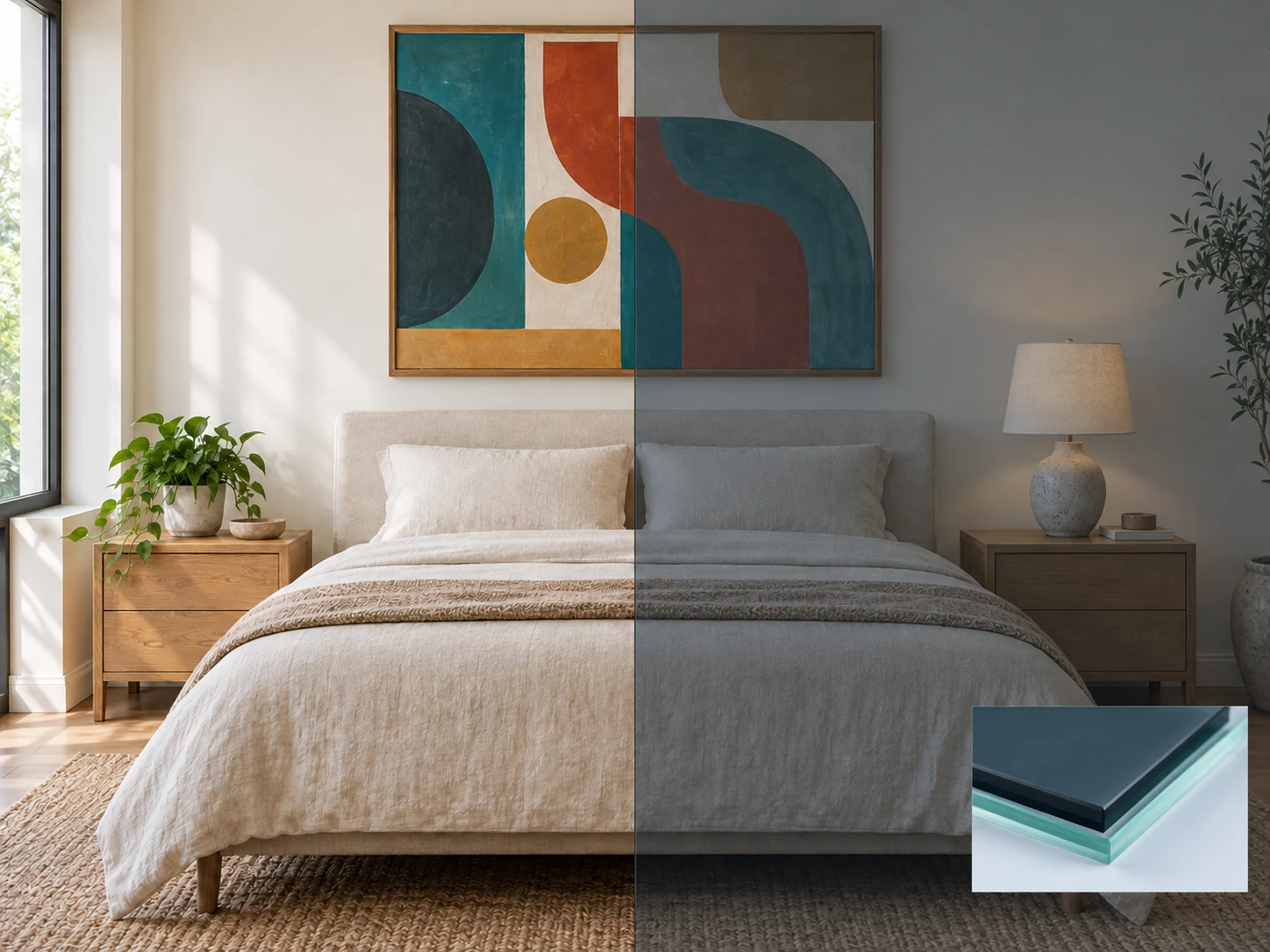
Grey colour in one of the glass layers.
Thickness / build-up: 44.1 and 44.2
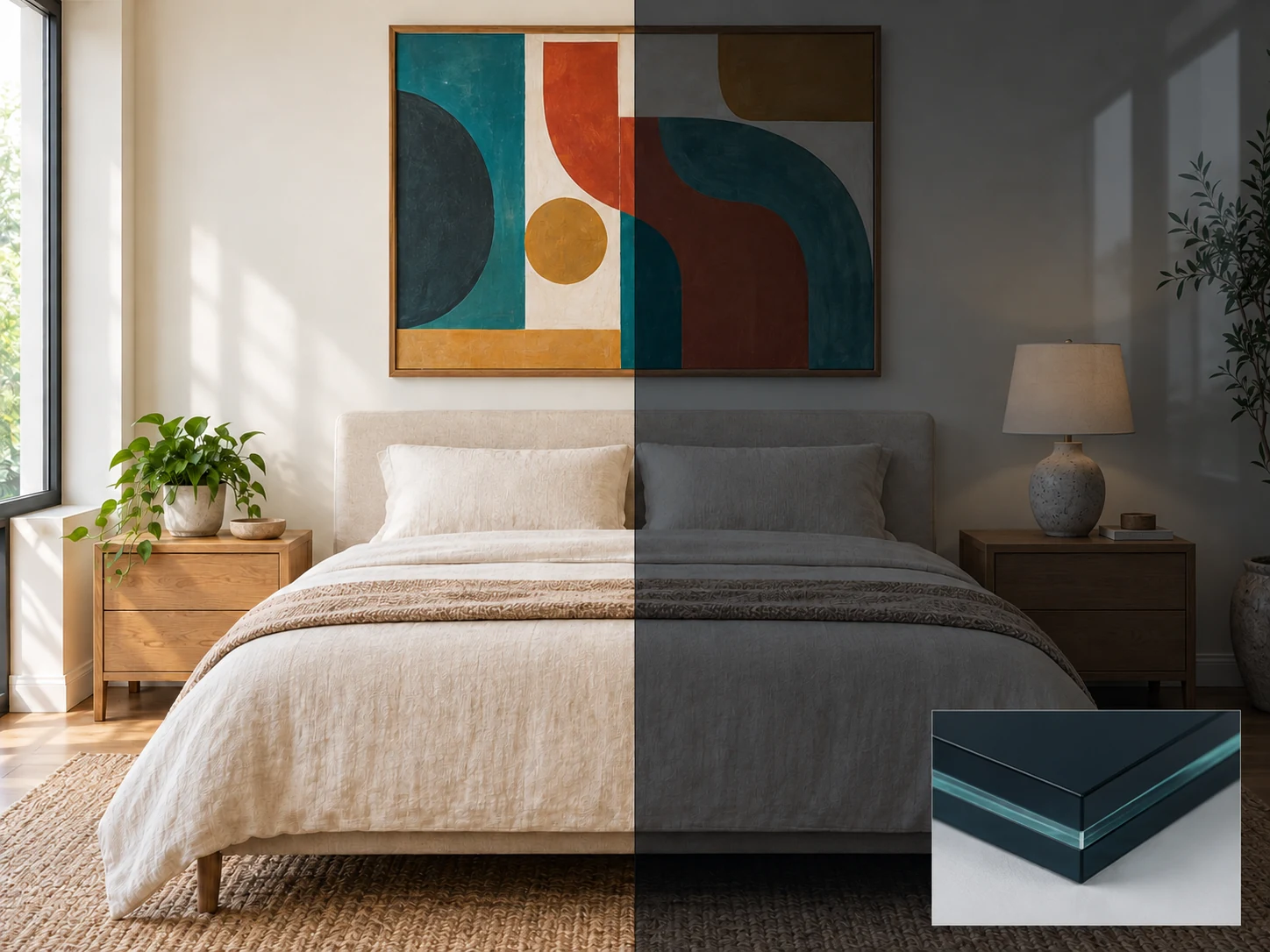
Two grey panes for a deeper visual effect.
Thickness / build-up: 33.1, 44.1 and 44.2
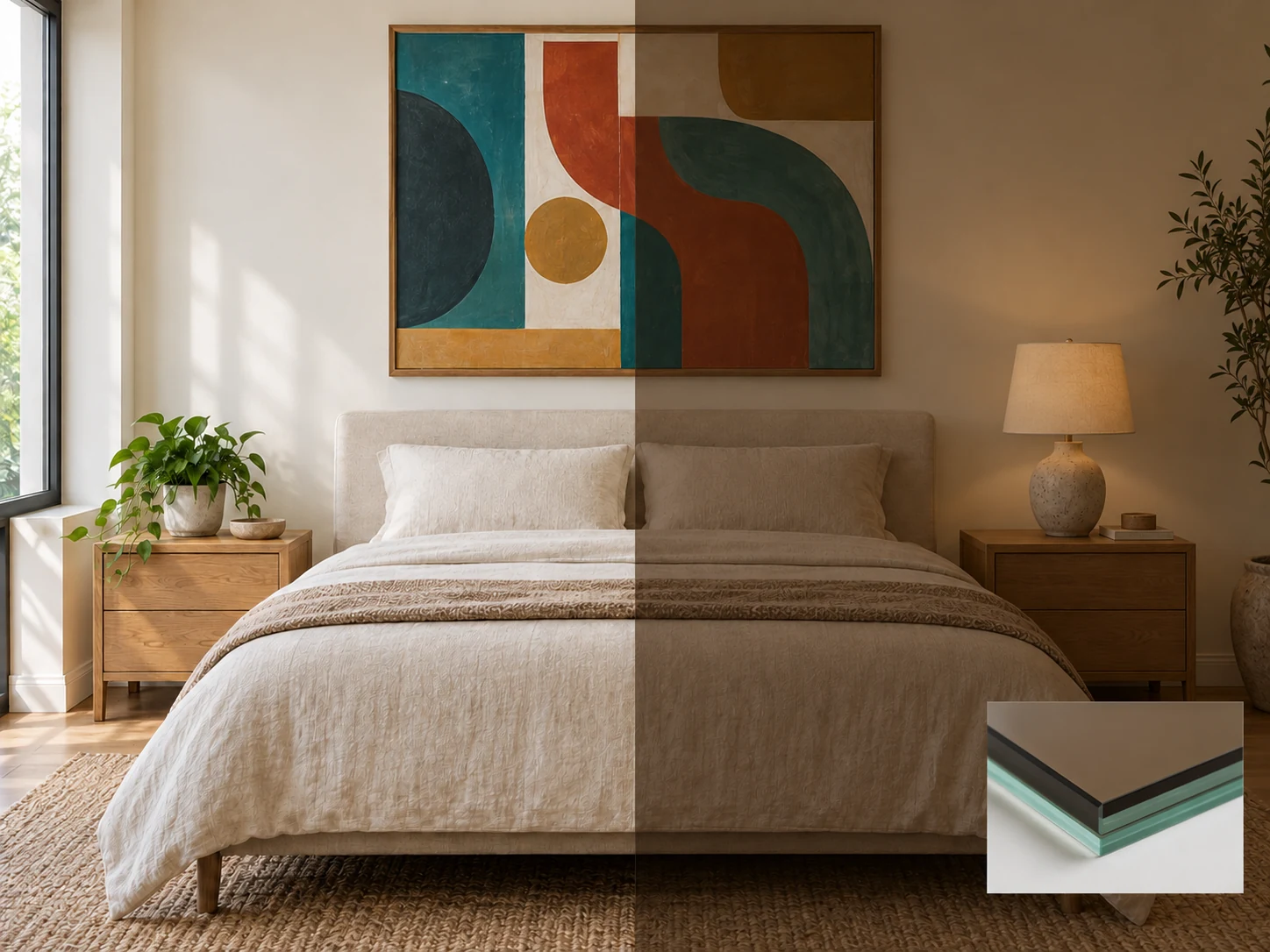
Bronze colour in one glass layer.
Thickness / build-up: 33.1 and 44.1
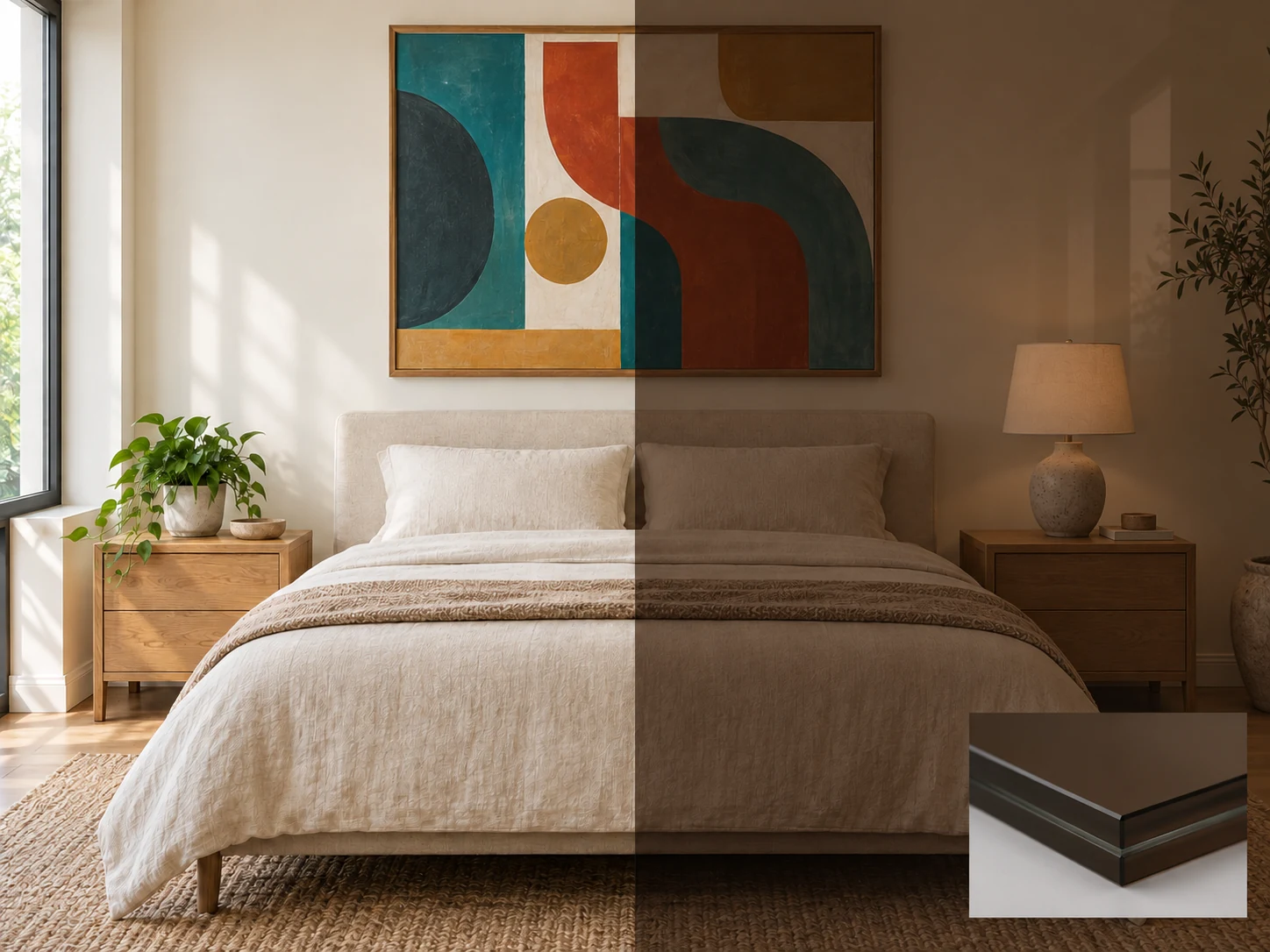
Two bronze panes for a stronger colour effect.
Thickness / build-up: 44.1
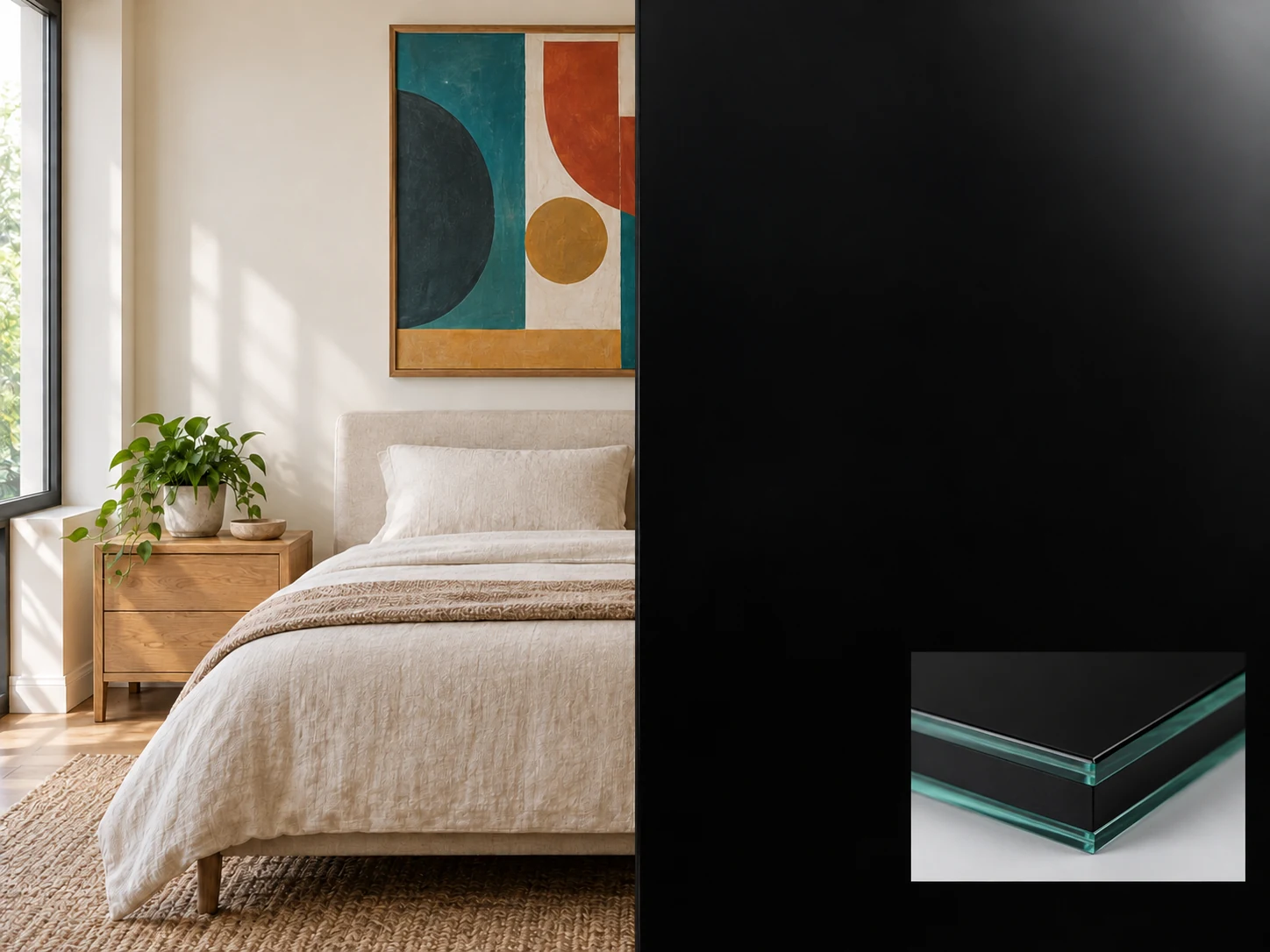
An opaque black laminated construction.
Thickness / build-up: 22.1, 33.1 and 44.1
B2B applications
Furniture and display components: combine the desired colour with the specified breakage behaviour.
Interior panels: review edge exposure, support, humidity and contact with mounting products.
Technical assemblies: define layer order, holes, cut-outs and interfaces in the drawing.
Before production
FAQ
It commonly identifies two nominal 4 mm panes and a two-film interlayer designation. The exact interlayer product, thickness and declared performance must still be specified; the code alone is not a complete technical description.
No. Acoustic performance depends on the complete glass construction and the installed system. An acoustic interlayer or a particular performance needs to be specified and documented.
The material schedule includes low-iron, grey and bronze constructions. The pane combination, processing, availability and required performance are confirmed for the project.
Yes. Send the first quantity, expected repeat demand and component drawings. We review the material, processing and conditions for a prototype, trial batch or repeat production. There is no single minimum quantity promised for every material.
Send drawings with dimensions and thickness, material or sample reference, quantity, edge finish, holes and cut-outs, assembly details and intended use. Include requirements for safety, appearance, packaging and repeat batches where relevant.
Prototype · Short batch · Repeat production
Send drawings with dimensions and thickness, material or sample reference, quantity, edge finish, holes and cut-outs, assembly details and intended use. Include requirements for safety, appearance, packaging and repeat batches where relevant.
A joiner, metalworker or assembly partner can provide the supporting structure. ZWAKA supplies the glass or mirror component to the agreed specification; coordinate interfaces and responsibilities before manufacture.