

B2B material catalogue · Glass to drawing
Low-iron glass / Optiwhite — material card
Low-iron float glass with a more neutral colour. Published thicknesses and sheet formats for display, furniture and technical components.
Explore materials and specifications ↓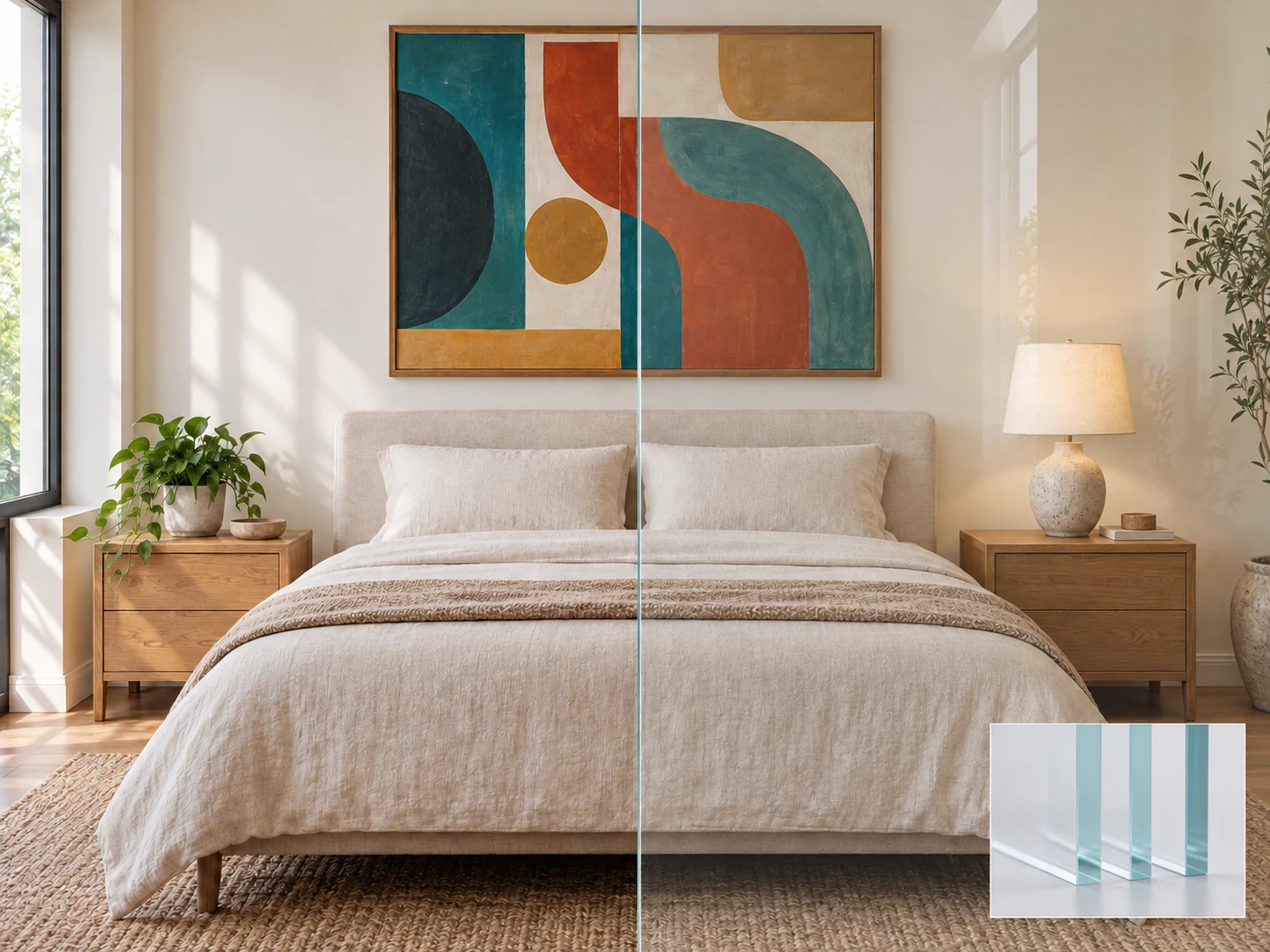
Material properties
A substrate for your component
Float glass is a flat, transparent base material for cut-to-size components. Standard clear glass has a slight green tint, particularly visible at exposed edges and in thicker panes. This is a material characteristic, not a surface coating.
Low-iron glass reduces this tint. It is useful when the displayed product, a light background or an exposed polished edge needs a more neutral appearance. The choice of substrate does not by itself establish safety, strength or suitability for a particular mounting system.
Specify the finished edge, machining and mounting separately. Any toughening or laminating requirements are checked for the chosen thickness and geometry before manufacture.
- Appearance
- Clear, with reduced green tint
- Manufacturers in the schedule
- PILKINGTON Polska Sp. z o.o.; imports.
- Published thicknesses
- 4, 5, 6, 8, 10, 12, 15, 19 mm
Source-sheet formats
Thicknesses and sheet sizes
Dimensions below are in millimetres and reproduce the ZWAKA material schedule. They describe source sheets, not guaranteed maximum finished-part sizes or current stock. Confirm availability, cutting layout and machining for your drawing.
- 4 mm
- 2250 × 16052550 × 16052140 × 16503210 × 22503210 × 25503300 × 2140
- 5 mm
- 2250 × 16052550 × 16053210 × 22503210 × 2550
- 6 mm
- 2250 × 16052550 × 16053210 × 22503210 × 2550
- 8 mm
- 2250 × 16052550 × 16052140 × 16503210 × 22503210 × 25503300 × 2140
- 10 mm
- 2250 × 16052550 × 16053210 × 22503210 × 2550
- 12 mm
- 2250 × 16052550 × 16053210 × 22503210 × 2550
- 15 mm
- 3210 × 2250
- 19 mm
- 3210 × 2250
FAQ
Before you specify the glass
What is the difference between float and low-iron glass?
Both can be clear float glass. A low-iron composition reduces the green tint of standard clear glass, especially noticeable at the edge or through a thicker build-up.
Is low-iron glass automatically toughened?
No. Low-iron describes the substrate. Toughening or laminating is a separate processing decision, checked for the component and its use.
Are these the maximum finished-part dimensions?
No. These are source-sheet formats in the material schedule. The finished size depends on the chosen sheet, cutting layout, edge work, holes, heat treatment and handling requirements.
Can we start with a prototype or a short series?
Yes. Send the first quantity, expected repeat demand and component drawings. We review the material, processing and conditions for a prototype, trial batch or repeat production. There is no single minimum quantity promised for every material.
What should a B2B enquiry include?
Send drawings with dimensions and thickness, material or sample reference, quantity, edge finish, holes and cut-outs, assembly details and intended use. Include requirements for safety, appearance, packaging and repeat batches where relevant.
Prototype · Short batch · Repeat production
Let’s define your glass component.
Send drawings with dimensions and thickness, material or sample reference, quantity, edge finish, holes and cut-outs, assembly details and intended use. Include requirements for safety, appearance, packaging and repeat batches where relevant.
A joiner, metalworker or assembly partner can provide the supporting structure. ZWAKA supplies the glass or mirror component to the agreed specification; coordinate interfaces and responsibilities before manufacture.