
01
Lacobel
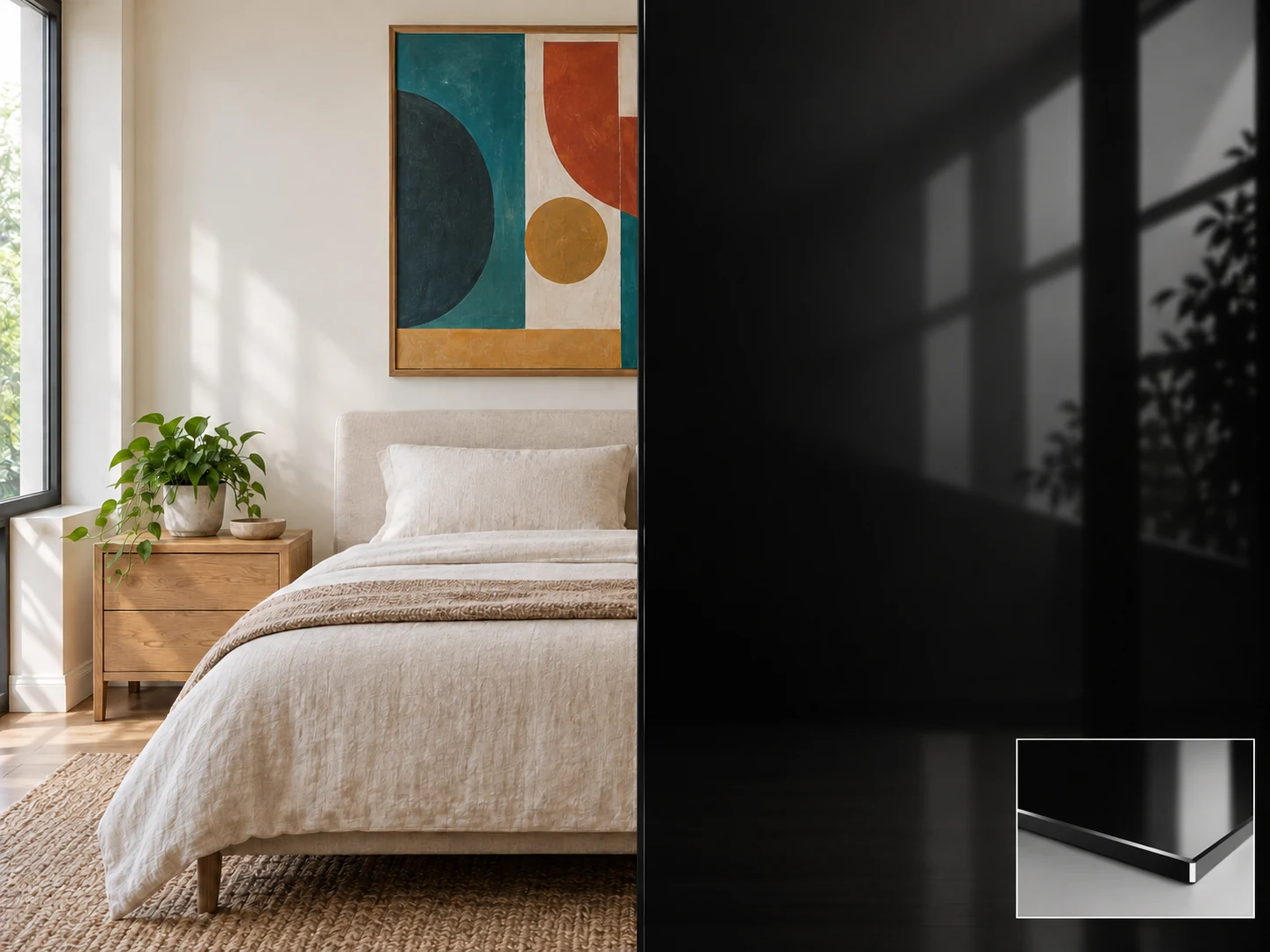
Opaque colour seen through a glossy glass surface.
Thickness / build-up: 4 and 6 mm

ZWAKA · Quick contact
Send us a project description and drawings, or call ZWAKA Glass directly.
B2B material catalogue · Glass to drawing
Opaque colour with a glossy or matt viewing surface for furniture and interior panels. Specify the colour reference, base glass, edge finish and mounting system together.
Explore materials and specifications ↓Material and function
Back-painted glass carries an opaque colour layer on the rear face. The viewer sees the colour through the glass. A glossy viewing face and a matt viewing face create different effects even when the nominal colour is similar.
The substrate can influence the perceived shade, particularly with pale colours. Approve a physical colour sample together with the surface finish and intended backing. Lacobel and Matelac are the catalogue examples; product variants have different processing rules.
ZWAKA material schedule
The following variants and thicknesses come from the existing ZWAKA material schedule. Current supply, manufacturer, sheet size and processing are confirmed for the order. Build-up codes are retained for laminated products.
Opaque colour seen through a glossy glass surface.
Thickness / build-up: 4 and 6 mm
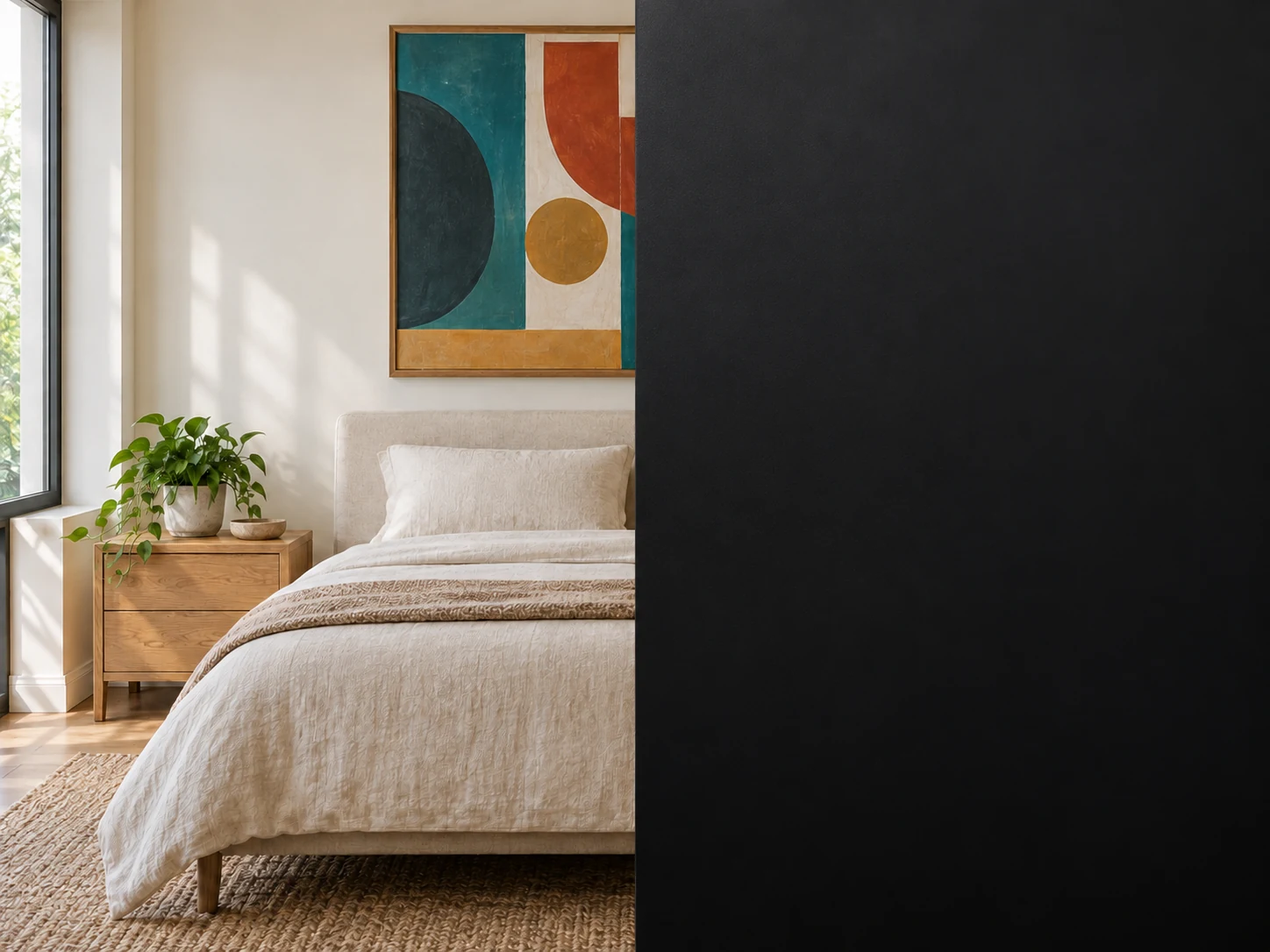
Opaque colour with a matt viewing surface.
Thickness / build-up: 4 mm
B2B applications
Furniture fronts and inserts: coordinate the painted rear surface with the frame, adhesive and panel support.
Opaque interior panels: define joints, exposed edges, cut-outs and the condition of the backing surface.
Repeat collections: retain an approved colour and finish reference for future batches.
Before production
FAQ
The standard decorative effect is opaque because of the rear colour layer. If light needs to pass through, specify that requirement and review a different material or product.
They are decorative painted-glass ranges with different viewing-surface effects: glossy for Lacobel and matt for Matelac. Confirm the precise product, colour and processing requirements.
Send a colour reference or physical sample. Availability, matching method and the conditions for an individual colour need to be agreed for the project.
Yes. Send the first quantity, expected repeat demand and component drawings. We review the material, processing and conditions for a prototype, trial batch or repeat production. There is no single minimum quantity promised for every material.
Send drawings with dimensions and thickness, material or sample reference, quantity, edge finish, holes and cut-outs, assembly details and intended use. Include requirements for safety, appearance, packaging and repeat batches where relevant.
Prototype · Short batch · Repeat production
Send drawings with dimensions and thickness, material or sample reference, quantity, edge finish, holes and cut-outs, assembly details and intended use. Include requirements for safety, appearance, packaging and repeat batches where relevant.
A joiner, metalworker or assembly partner can provide the supporting structure. ZWAKA supplies the glass or mirror component to the agreed specification; coordinate interfaces and responsibilities before manufacture.