
01
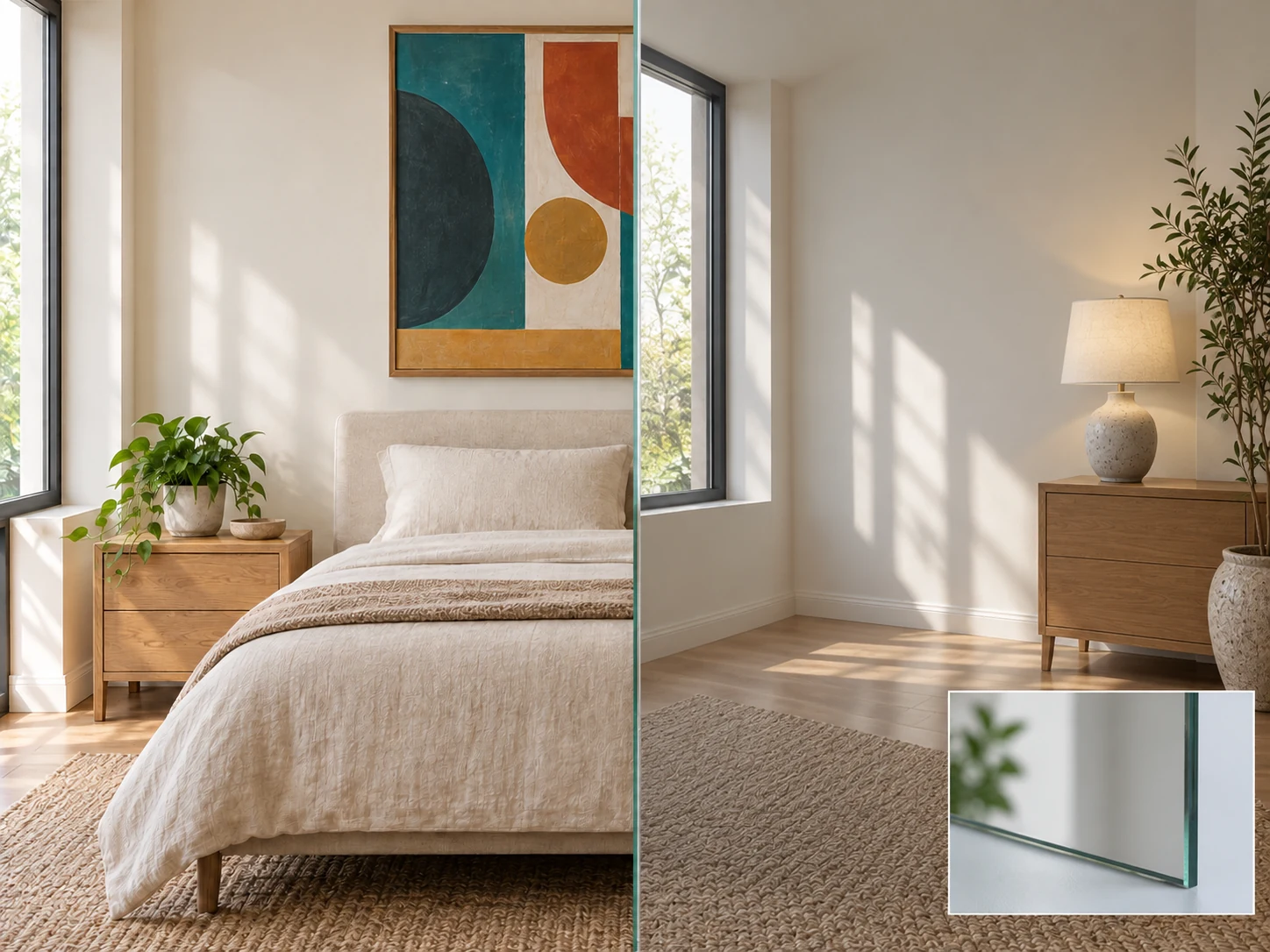
Silver mirror on clear float
A conventional silver mirror on standard clear glass.
Thickness / build-up: 2, 3, 4, 5 and 6 mm

ZWAKA · Quick contact
Send us a project description and drawings, or call ZWAKA Glass directly.
B2B material catalogue · Glass to drawing
Silver, low-iron, grey and bronze mirror components to drawing. Coordinate the reflection, finished edge, holes and mounting with the furniture or interior assembly.
Explore materials and specifications ↓Material and function
A conventional mirror combines a glass substrate with a reflective layer and protective backing. The substrate affects the colour of the reflection: standard clear, low-iron, grey and bronze bases do not produce the same visual result.
Low-iron mirrors offer a more neutral base, while grey and bronze versions create a darker decorative reflection. Technical mirror-effect products for screens or specific environments belong to a separate specification and should be checked for their intended use.
ZWAKA material schedule
The following variants and thicknesses come from the existing ZWAKA material schedule. Current supply, manufacturer, sheet size and processing are confirmed for the order. Build-up codes are retained for laminated products.
A conventional silver mirror on standard clear glass.
Thickness / build-up: 2, 3, 4, 5 and 6 mm

A more neutral substrate for the reflection.
Thickness / build-up: 4 mm

A cool, darker decorative reflection.
Thickness / build-up: 3 and 4 mm
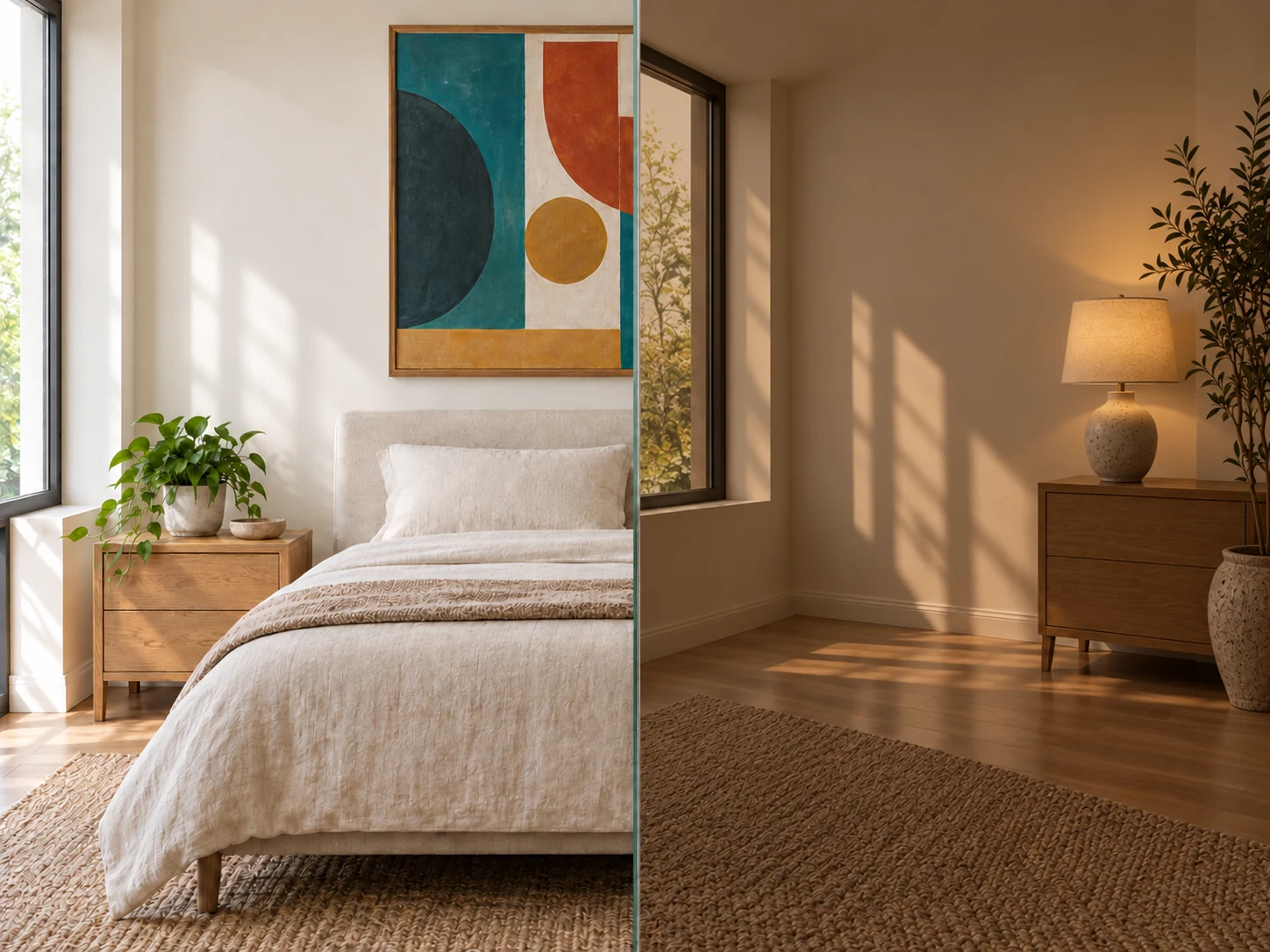
A warm, darker decorative reflection.
Thickness / build-up: 3 and 4 mm
B2B applications
Wardrobe and furniture fronts: match the mirror to frames, sliding systems, joints and hardware.
Interior and retail panels: review visible edges, bevels, repeated divisions and the mounting substrate.
Custom furniture parts: define holes, cut-outs and any rear safety treatment in the drawing.
Before production
FAQ
The low-iron substrate reduces the green tint contributed by standard clear glass. The result should be compared as a finished mirror sample under the intended lighting.
These operations can be assessed for the selected mirror and geometry. Specify positions, edge distances, cut-outs and the required edge treatment before manufacture.
A screen-cover application usually requires a specifically selected partially transmitting product. Provide the display and optical requirements and review the coated-glass family.
Yes. Send the first quantity, expected repeat demand and component drawings. We review the material, processing and conditions for a prototype, trial batch or repeat production. There is no single minimum quantity promised for every material.
Send drawings with dimensions and thickness, material or sample reference, quantity, edge finish, holes and cut-outs, assembly details and intended use. Include requirements for safety, appearance, packaging and repeat batches where relevant.
Prototype · Short batch · Repeat production
Send drawings with dimensions and thickness, material or sample reference, quantity, edge finish, holes and cut-outs, assembly details and intended use. Include requirements for safety, appearance, packaging and repeat batches where relevant.
A joiner, metalworker or assembly partner can provide the supporting structure. ZWAKA supplies the glass or mirror component to the agreed specification; coordinate interfaces and responsibilities before manufacture.