

Planning a glass display case around the exhibit
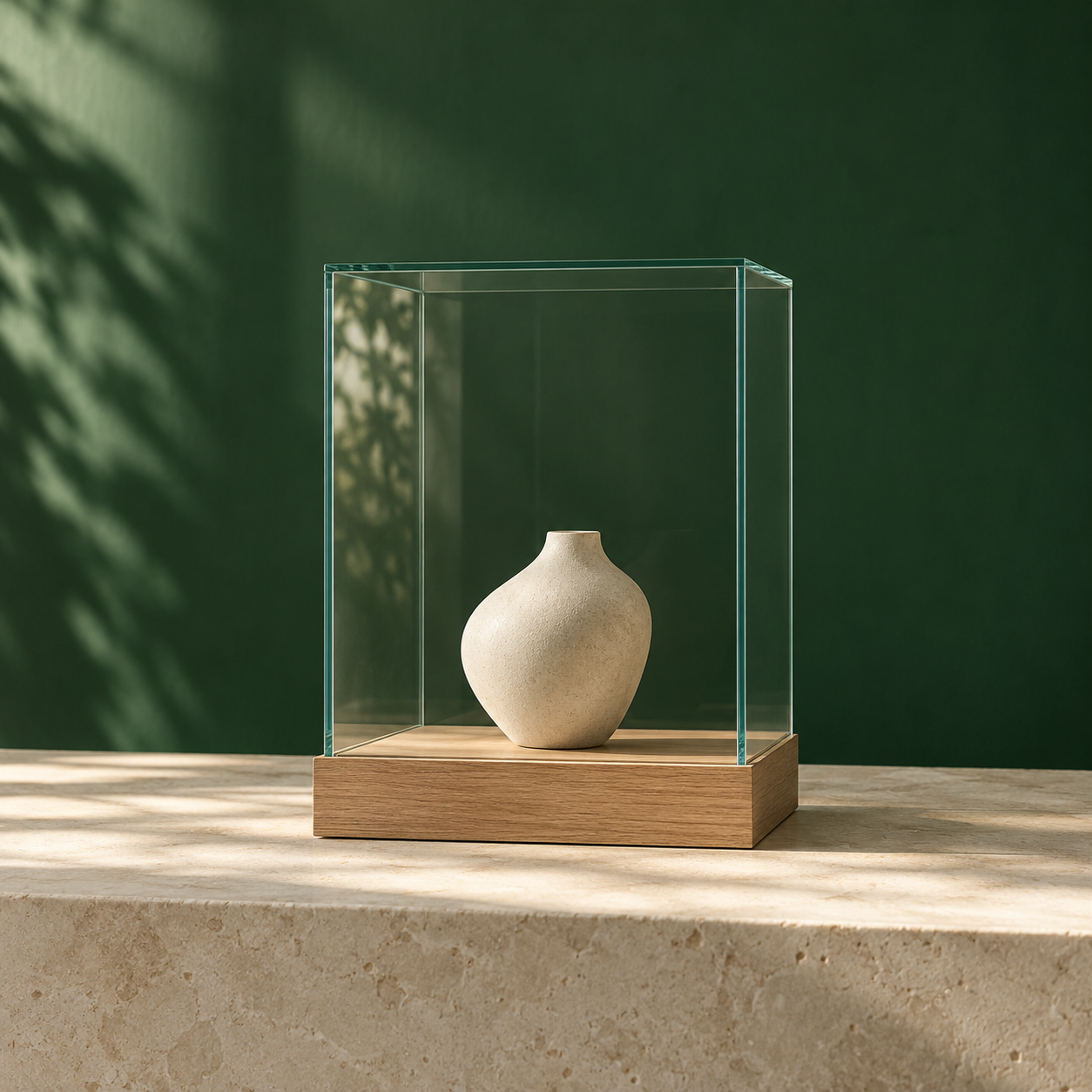
Illustration: AI visualisation
A glass display case starts with the object it will present. For shopfitters, exhibition designers and manufacturers, the first question is what the visitor should see and how the object will be used. External dimensions alone do not describe the finished case.
Define the exhibit and usable space
Provide the object's dimensions, photographs and a sketch showing its intended position. Allow for the space around it and identify the main viewing directions. State whether the case is freestanding or wall-mounted, and whether visitors view it from one side or several. This helps coordinate the glass surfaces and overall geometry.
Plan access as part of the case design
Explain who will open the case, how often the contents will change and which side is accessible. An object may fit inside but still be difficult to pass through the proposed opening. Hardware, opening dimensions and any locking arrangement should therefore be considered together with the structure.
Consider glass, printing and lighting together
Transparency, visible edges, UV printing and lighting all affect how the exhibit appears. Mark areas that must remain clear and those intended for printing or masking. A visualisation communicates the design concept; agreed technical drawings define the component to manufacture.
Prepare for repeat production
For display case systems manufactured in repeat batches, a first component or trial batch can help assess fit and the interaction of the parts. Record the approved dimensions, processing and finish clearly before ordering further batches.
When contacting ZWAKA Glass, include drawings, quantity, application, access requirements and your requested delivery date. These provide a practical starting point for reviewing the feasibility of your project.
Discuss your B2B project
Send us your drawings and requirements.
Send a project enquiry →